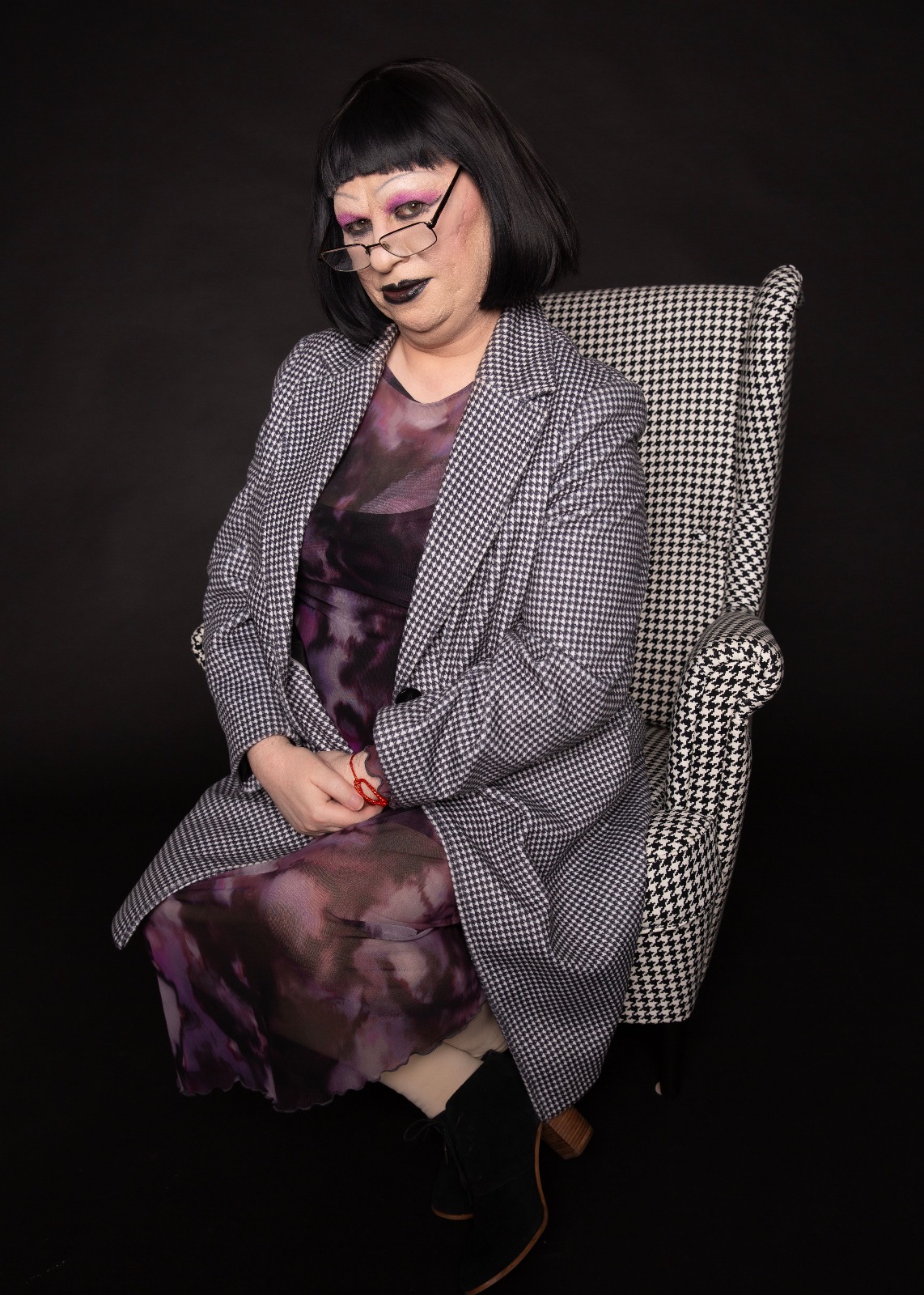

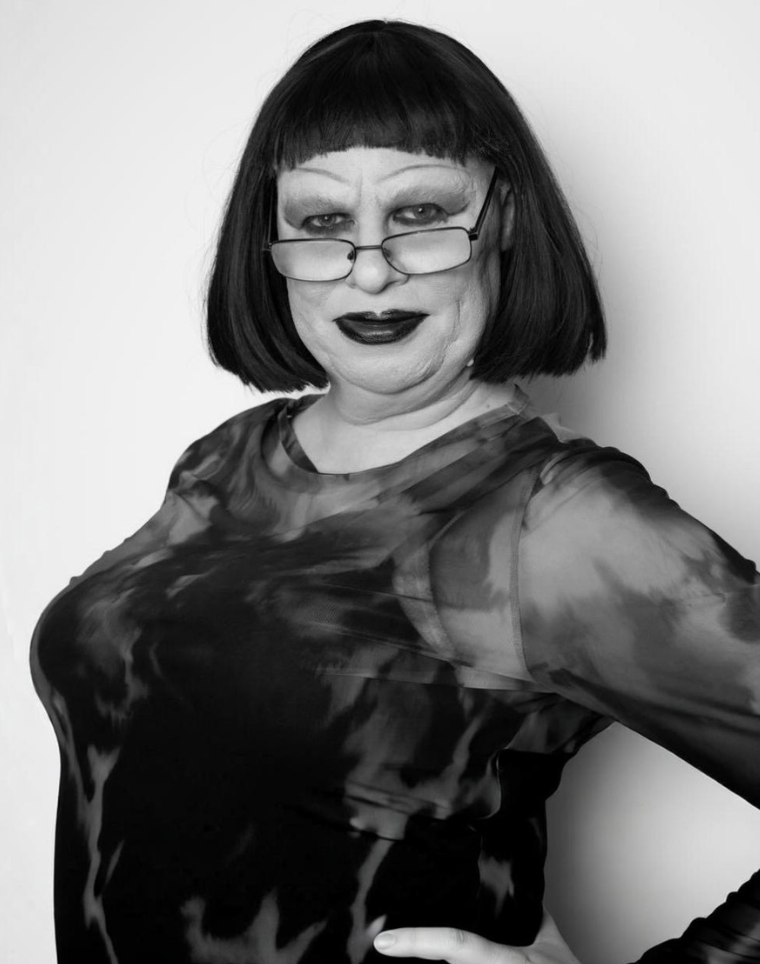
About Madam Lether
Madam Lether is a British writer working across horror, science fiction, and dark fantasy. She first stepped into formal publishing with The Martian Olive Tree & Other Stories, a four-story collection released in August 2025 and made available for readers at no cost, designed as an introduction to her work and narrative voice. The collection spans speculative settings and varied tones, illustrating her early commitments to genre blending and imaginative storytelling.
She followed this debut with the full-length Tales from the Algorithm, published in October 2025 by The Library of Shadows. That anthology positions itself at the intersection of horror and speculative fiction, engaging with contemporary concerns about technology, identity, and unseen systems shaping modern life.
Madam Lether’s work is informed by a long period of idea development and creative observation. In live appearances including readings and interviews at public events she has spoken about writing as a practice deeply rooted in both personal and shared experience. Her voice reflects an interest in how narratives can explore emotional, cultural, and systemic tensions through genre forms, and how speculative settings can illuminate aspects of the human experience.
Across her projects, she has embraced a multi-format approach to storytelling. In addition to print and digital texts, she has participated in documentary projects and live performance readings that extend her work beyond the page and into spoken and visual mediums.
Madam Lether also maintains an active presence on social platforms and creator spaces, sharing updates, reflections, and community engagement around her projects. This relationship with readers and supporters forms a core part of her public literary life, emphasizing accessibility, conversation, and collective experience.
Before the Books
Madam Lether was born in Blackburn in the 1970s. Long before publication, before readings or interviews, there was reading; constant, wide-ranging, and formative. From her mid-teens onward, books became a way of understanding the world. She began in fantasy, a genre that has remained a lifelong touchstone, but over time her reading widened to science fiction, horror, and works that sat uneasily outside any single category. Fantasy was never abandoned, but it became part of a broader conversation; one that included speculative fiction, dark storytelling, and narratives that resisted neat classification.
Her earliest memories of storytelling are tied to the strange rather than the comforting. A bedtime story gone slightly wrong. A moment where the ordinary tipped, just enough, into the uncanny. As a child, she was drawn to thresholds: the shadow under the bed, the door that might not lead where it should, the feeling that a familiar space could turn unfamiliar without warning. Storytelling, even then, was a way of tilting the world by a few degrees; not escaping reality, but revealing its teeth.
Horror spoke to her differently than other genres. Where some stories promised safety or resolution, horror offered recognition. It acknowledged fear as a shared language rather than a flaw to be overcome. It did not insist that everything would be fine. Instead, it named the darkness and walked through it honestly. That honesty mattered. It felt like a hand on the shoulder in the dark guidance, not denial.
Her queer identity sharpened that connection. As a young reader, she identified less with heroes in the spotlight and more with figures at the edge: the outsider, the mage by the campfire, the brilliant and brittle characters marked by difference. Horror extended that recognition further. It understood otherness before she had the language for it. The monster was never just a monster it was the sensation of being seen and hunted, of transformation and survival, of entering a room and feeling every gaze scrape across your skin. Horror allowed her to claim the creature and say: if I am the thing you fear, then I am also the thing you cannot ignore.
Books and films provided the architecture. Life supplied the drafty corridors. Childhood spaces creaked with implication: houses that felt like they held secrets, playgrounds at dusk, whispered rumours about mirrors that could swallow you whole. These moments didn’t frighten her away from stories; they pulled her closer. They made imagination tactile. Worlds formed not as escapist fantasies, but as rooms you could step into and feel cling to your clothes.
For years, those worlds existed only in her head. Ideas accumulated without finding their way onto the page, lingering like ghosts that refused to introduce themselves. Fear, lack of confidence, and time braided together into familiar barriers. The blank page wasn’t empty; it was crowded with imagined critics. There were moments when she considered giving up on writing entirely, resigning herself to being a reader, a fan, an observer. But the stories didn’t accept that compromise. They kept tapping at the glass.
What finally changed wasn’t talent or permission from outside, but a decision to choose herself. She stopped waiting to be selected and began writing imperfectly, deliberately, trusting that voice is discovered through use rather than interrogation. Encouragement from her drag sister, Lentil Pulse; who urged her to give writing the same seriousness she gave performance; helped make that leap possible. The shift was quiet, but irreversible.
The years before publication were not empty. They were crowded with reading, watching, listening, imagining with stories waiting for the moment they could finally speak.
Life After Writing
Madam Lether now lives and works in Reading, where writing has shifted from something private into something public, shared, and continuously unfolding. Since committing fully to the page, her life has expanded outward: into bookshelves, stages, recordings, and conversations. Writing is no longer just an internal practice, but a visible one shaped by readers, collaborators, and community. What once lived quietly in notebooks now moves through rooms, screens, and voices.
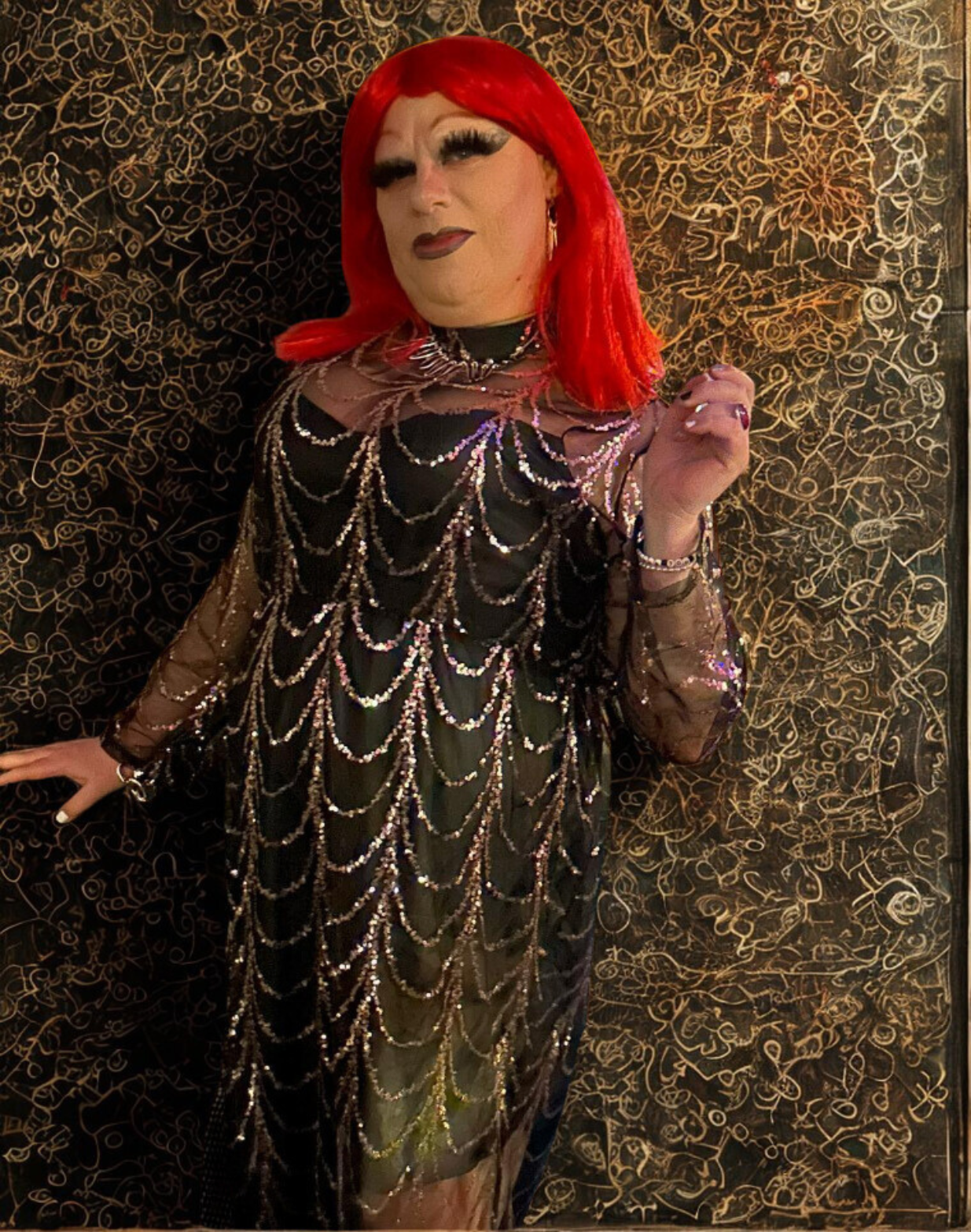
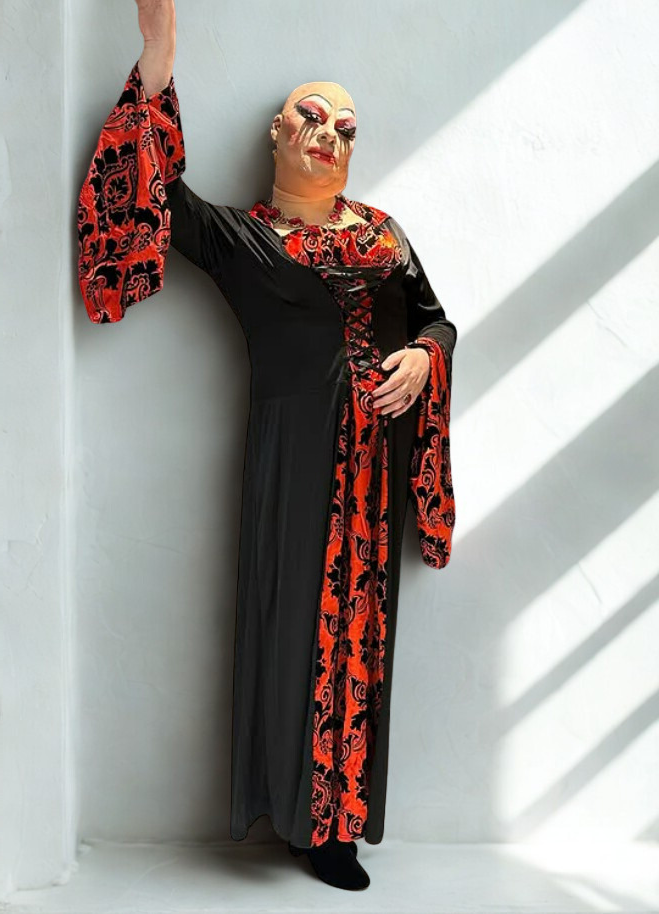
Alongside her work as a writer, Madam Lether is also a drag artist under the name Mistress Lezmerelda a practice that continues to inform her relationship with performance, language, and identity. Writing has opened new ways to explore and articulate her trans and gender-fluid identity, not as explanation, but as presence. As her platform has grown, so has her willingness to speak openly: she has become an outspoken advocate for asexual and aromantic visibility, using both her work and her public voice to challenge assumptions about desire, intimacy, and narrative worth.
Becoming an indie author reshaped everything. She established a Patreon to support ongoing work, invite readers behind the scenes, and share writing outside traditional gatekeeping. She took part in a feature-length documentary charting the making of Tales from the Algorithm, embracing film and audio as extensions of the written word. Her books are now published and distributed through major retailers including Waterstones, Blackwell’s, and Amazon, as well as appearing in independent bookshops with Bonnie in the Machine arriving on the shelves at Four Bears Books in Caversham, Reading.
Beyond individual titles, Madam Lether is one of the founders of The Library of Shadows and The Library of Shadows Studios, spaces created to support dark, experimental, and independent work across formats. She continues to give live readings, take part in public discussions, and develop new projects, with further appearances planned across 2026 and 2027. This phase of her career is not a conclusion it’s ignition. Madam Lether has only just begun.
Asexual and Aromantic Advocacy
Madam Lether’s advocacy for asexual and aromantic visibility is inseparable from her work as a writer. Rather than treating asexuality or aromanticism as footnotes or explanations, she centres them as lived realities; complex, textured, and worthy of narrative focus. Her writing resists the assumption that intimacy must be romantic or sexual to be meaningful, and instead explores connection through fear, care, solidarity, observation, and survival. In doing so, her work quietly but deliberately pushes back against the dominance of romance-driven storytelling in horror, science fiction, and speculative literature.
Beyond the page, Madam Lether has been increasingly open about her own identity as asexual and aromantic, using social media and public appearances to speak candidly about erasure, misunderstanding, and the pressure to conform to normative narratives of desire. Her posts and commentary often address the absence of ace and aro voices in mainstream media, the tendency for such identities to be treated as phases or problems to be solved, and the lack of language many people are given to understand themselves. This advocacy is not framed as instruction, but as visibility; naming experiences out loud so others can recognise themselves without apology.
Crucially, her activism feeds back into her creative practice. Madam Lether’s stories frequently examine forms of otherness that exist outside easy categorisation, asking readers to sit with characters who do not behave as expected, want what they are “supposed” to want, or resolve neatly into familiar arcs. By writing from an asexual and aromantic perspective and by speaking openly about that perspective; she contributes to a growing body of work that expands what representation can look like in genre fiction. The result is not didactic, but enduring: stories that make space, challenge defaults, and quietly insist that absence of desire is not absence of depth.